Furnace Repair in Louisville, KY
No heat? D&M Service Company repairs furnaces for Louisville homes.
- ✓ Local shop at 11152 Ballardsville Road, Louisville
- ✓ Open Monday to Saturday, 9 AM to 5 PM. Closed Sunday
- ✓ Furnace repair, with emergency repair part of what we do
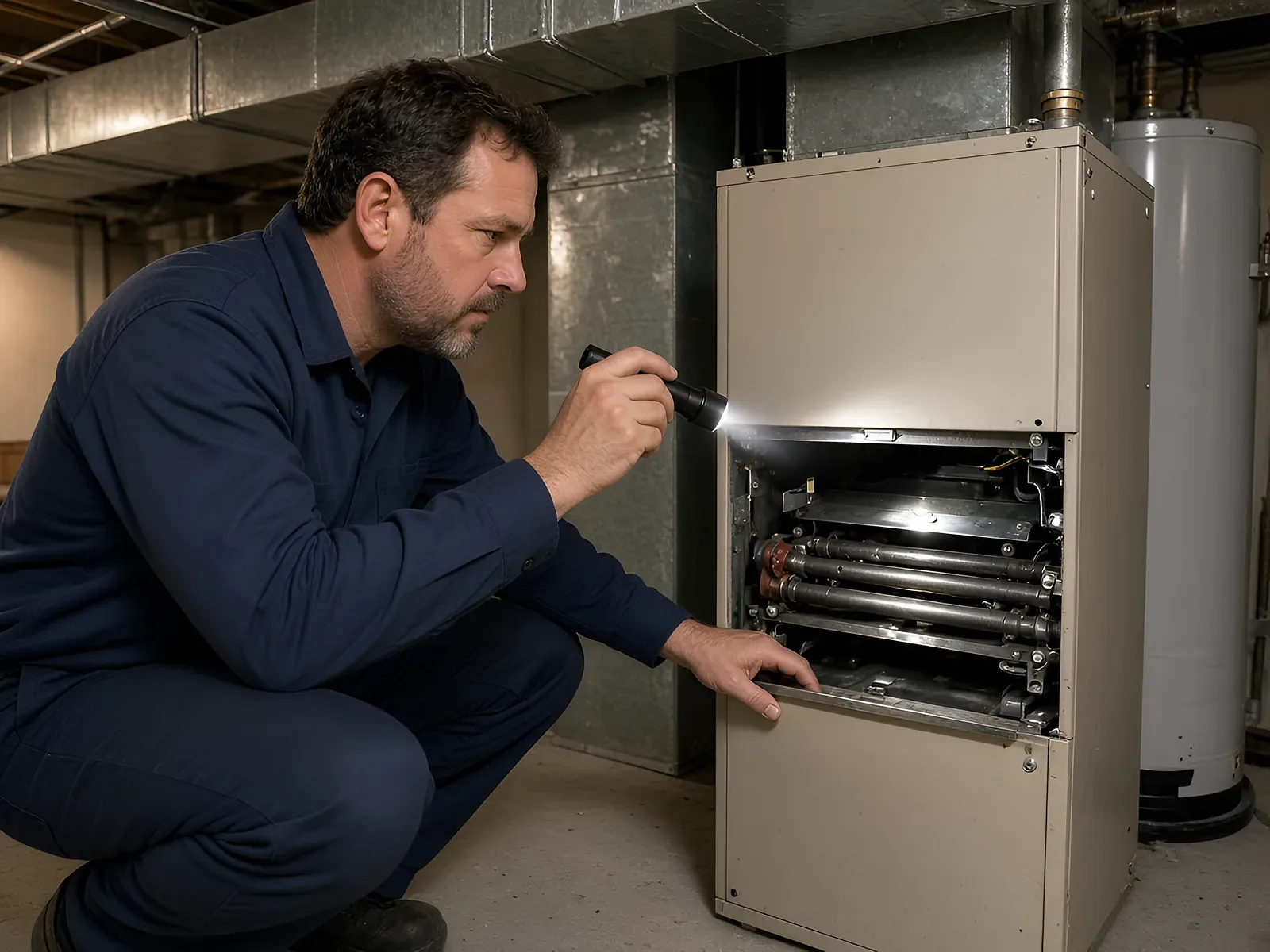
When to call
A furnace usually gives you warning. These are the signs worth acting on:
- The furnace won't start or won't stay lit. On a gas furnace, that often points to the igniter, the flame sensor or the gas valve.
- The vents blow cold air. The burners may be shutting off, or the thermostat may be set to Fan only.
- It turns on and off every few minutes. Short cycling. Often a clogged filter, a dirty flame sensor or overheating.
- Banging, squealing or rattling. A rattle can be a loose panel. A squeal is often the blower motor or a belt. A bang at startup can be delayed ignition, which needs attention soon.
- The house heats unevenly or not at all. A weak blower, a blocked duct or a furnace that can't keep up.
- The pilot light or igniter keeps going out. Don't keep relighting it. Find out why.
Louisville gets some cold nights in the teens. A furnace that quits on one of them won't fix itself by morning.
Check these first
A few minutes of checking can save you a call, or at least give us a better description:
- Thermostat. Set to Heat, and set above the current room temperature. Fresh batteries in the thermostat, if it uses them.
- Filter. A clogged filter can overheat a furnace and make it shut itself down. Pull it out. If you can't see light through it, replace it.
- Switch and breaker. The furnace has a switch that looks like a light switch, usually on or near the unit. It gets flipped off by accident more often than you'd think. Check the breaker as well.
- Front panel. Closed tight. Most furnaces have a safety switch that keeps them from running with the door off.
Don't take the furnace apart. Anything past those checks, leave to a technician.
Smell gas? Get everyone out of the house first. Then call LG&E or 911 from outside. Don't flip switches or look for the source.
Carbon monoxide alarm going off? Leave the house and call 911.
What usually fails on a furnace
The list is short. Knowing it helps you follow what the technician is telling you. Which parts apply depends on your furnace, since not every furnace is built the same way.
Igniter or pilot
Most newer gas furnaces light with a hot surface igniter, which is a ceramic part that cracks with age. Older furnaces keep a standing pilot flame, which can blow out. Either way, if the burners don't light, this is where a technician starts.
Flame sensor
A thin metal rod that tells the furnace the burners are lit. It gets coated with residue over time and stops sensing the flame, so the furnace shuts the gas off after a few seconds. It's one of the most common reasons a furnace lights and then quits.
Dirty filter and limit switch
When airflow drops, the furnace gets hot and a safety switch shuts it down. The cause is often the filter, and the fix is a new one.
Blower motor and capacitor
The blower pushes warm air through the house. If it squeals, runs slow or doesn't start, the motor or its capacitor is a likely cause. The same blower moves air for the air conditioner in summer.
Inducer motor and pressure switch
On many gas furnaces the inducer fan clears exhaust before the burners light. If it fails or the pressure switch doesn't close, the furnace waits and nothing happens.
Thermostat
Dead batteries, a wrong setting or a bad connection can look like a dead furnace. It's worth ruling out first.
Repair or replace?
Most furnace repairs are small ones: an igniter, a sensor, a capacitor, a motor. If one part failed and the furnace has otherwise run fine, repair usually makes sense.
It's time to talk about replacing when the furnace is old and repairs keep coming, when it can't keep the house warm, or when a technician finds a cracked heat exchanger. A cracked heat exchanger can let combustion gases into the house and isn't something to patch around.
We repair and install, so you can ask us both questions. If you're looking at a replacement, tell us what you have now when you call. You can also read about AC installation if the air conditioner is on its last legs too.
The first cold night of the year
The most common furnace calls come right after the first cold snap, after months of sitting idle. The furnace has to start cold, with whatever dust, wear or cracked part it picked up since spring. That's usually when you find out.
Turn it on for a few minutes on a mild fall day instead of waiting for a freeze. If it starts, runs and warms the house, you're in good shape. If it doesn't, you have time to call before the weather forces the issue. Change the filter at the same time.
Emergency repair and hours
Emergency repair is part of what we do. If the heat is out, call and tell us what the furnace is doing and give us the street address. We work in Louisville and nearby towns, including Prospect, Pewee Valley, Fairdale, Mt Washington, Simpsonville, Anchorage, Crestwood and Lyndon. Our hours are Monday to Saturday, 9 AM to 5 PM. The shop is closed Sunday. For the full list of towns, see service areas.
Common questions
Why won't my furnace turn on?
Start with the thermostat: set it to Heat and above room temperature, and replace the batteries if it uses them. Then check the filter, the furnace switch, the breaker and the front panel, which has to be snapped on tight. If all of that is fine, the cause is inside the furnace.
Why is my furnace blowing cold air?
On a gas furnace, the burners may have shut off because of a dirty flame sensor, a failed igniter or a clogged filter that made the furnace overheat. Check the filter, make sure the thermostat is set to Heat and not Fan only, and call if the air stays cold.
Why does my furnace turn on and off every few minutes?
That's called short cycling. A clogged filter, a dirty flame sensor or an overheating furnace is the usual cause. Replace the filter first. If it keeps happening, the furnace needs a technician.
My furnace smells like burning the first time I turn it on. Is that normal?
A light dusty smell for a short while on the first start of the season is common, because dust has settled on the heating parts. A strong or lasting smell, a smell of gas or a carbon monoxide alarm is not normal. Leave the house and call LG&E or 911 from outside.
What should I do if I smell gas or my carbon monoxide alarm goes off?
Get everyone out of the house first. Don't flip switches or use a phone inside. Then call LG&E or 911 from outside. For a carbon monoxide alarm, leave the house and call 911.
Do you do emergency furnace repair?
Emergency repair is part of what we do. Call (502) 429-5885 and tell us what's going on. Our hours are Monday to Saturday, 9 AM to 5 PM.
If the checks didn't help, call and tell us what the furnace is doing.